

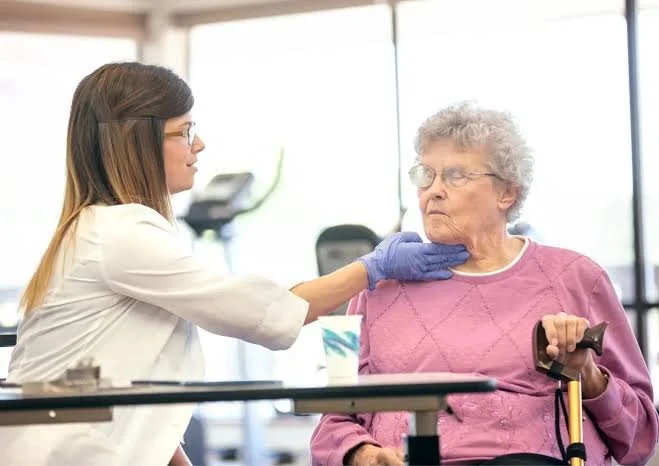
Speech and Language Therapy for Swallowing Disorders
What is a swallowing disorder?
A swallowing disorder, also known as dysphagia, occurs when an individual experiences difficulties swallowing food, drinks or saliva safely and efficiently. It can affect any stage of the swallowing process, from preparing food in the mouth and chewing, to moving food and drink through the throat and into the oesophagus.
Dysphagia can affect people of all ages and may arise from a range of conditions, including stroke, acquired brain injury, neurological conditions, developmental difficulties or changes associated with ageing.
Swallowing difficulties can present in different ways, including coughing or choking during meals, difficulty chewing, food or drink leaking from the mouth, food feeling stuck in the throat, changes in voice quality after swallowing, or recurrent chest infections. Some difficulties may be less obvious, with food or drink entering the airway without an obvious cough or choking response (known as silent aspiration).
Dysphagia can impact not only physical health and safety, but also nutrition, hydration, independence, mental wellbeing and quality of life. Early identification and appropriate assessment by a dysphagia trained Speech and Language Therapist (SLT) can help identify the nature of the difficulty and determine the most appropriate management and support.
How do you assess swallowing disorders?
Lauren is a dysphagia trained Speech and Language Therapist (SLT). She has qualifications in Adult and Paediatric Dysphagia, and an additional qualification in Paediatric Dysphagia and Feeding Disorders.
A specialist assessment of the swallow enables Lauren to understand how an individual manages food, drinks, and saliva, and identify any difficulties to determine whether swallowing is safe and effective.
An assessment typically begins with a detailed discussion about the individual's medical history, current difficulties, eating and drinking habits, previous swallowing concerns and any impact on their nutrition, hydration and quality of life.
Lauren will then complete a clinical swallowing assessment, which may look at:
Oral motor skills: movement, strength, coordination and control of the lips, tongue, jaw and facial muscles.
Chewing and food preparation: how effectively food is managed and prepared in the mouth.
Swallowing function: how food and drink are transferred through the mouth and throat.
Signs of swallowing difficulty: including coughing, choking, changes in voice quality, multiple swallows or difficulty managing saliva.
Mealtime presentation: posture, positioning, alertness, fatigue, independence and the impact of the mealtime environment.
Where clinically indicated, further investigations may be recommended to gain a more detailed understanding of swallowing function. If necessary, Lauren can refer you into an appropriate NHS or private service to access these additional tests. These include:
Videofluoroscopic Swallowing Study (VFSS): A moving X-ray examination that allows the SLT and radiology team to observe the swallowing process, including how food and drink move through the mouth and throat.
Fibreoptic Endoscopic Evaluation of Swallowing (FEES): A procedure using a small flexible camera passed through the nose to observe aspects of swallowing function, including airway protection and the presence of residue.
Following assessment, Lauren will provide recommendations tailored to your individual needs. This may include advice on food and drink consistencies (IDDSI), positioning, mealtime strategies, swallowing techniques, rehabilitation exercises and ongoing management.
Every swallowing assessment is individualised and takes into account your medical history, presentation, goals, and priorities; with the aim of supporting safe, effective and enjoyable eating and drinking wherever possible.
How are swallowing disorders treated?
Treatment for swallowing difficulties is tailored to the individual's needs.
Following a comprehensive assessment, Lauren will develop an individualised management or rehabilitation plan. The aim is to improve swallowing function where possible, reduce risks associated with eating and drinking, and support individuals to maintain or regain as much independence and quality of life as possible.
Treatment may include:
Swallowing rehabilitation: Targeted exercises and techniques designed to improve the strength, coordination, range of movement and function of the muscles involved in swallowing.
Oral motor therapy: Activities to support the movement, coordination and control of the lips, tongue, jaw and facial muscles.
Swallowing strategies: Teaching specific techniques to support safer and more efficient swallowing, such as changes to head position, posture or swallowing patterns.
Food and fluid modifications: Recommendations around food textures and drink thickness, where appropriate, to support swallowing safety and efficiency.
Mealtime support: Advice on positioning, pacing, bite and sip sizes, supervision and environmental adjustments to support successful mealtimes.
Sensory approaches: Where appropriate, using sensory stimulation and carefully selected techniques to support oral awareness, sensory processing and engagement with eating and drinking.
Carer and family education: Providing practical advice, training and guidance to those supporting the individual with their eating, drinking and swallowing needs.
Our approach is always person-centred and collaborative. We recognise that eating and drinking are about much more than nutrition and hydration; eating and drinking provides pleasure, mealtimes provide important social interactions, and in general, has a huge impact on our quality of life. Our aim is to work alongside individuals, families and wider healthcare teams to develop practical, meaningful strategies that support the best possible outcomes.