

Sensory Feeding Service
What is the Sensory Feeding Service?
Eating and drinking involves much more than simply tasting and swallowing.
For some people, differences in sensory processing, oral motor skills and previous experiences with food can make mealtimes challenging, overwhelming or distressing.
Our Sensory Feeding Service provides specialist support for children and adults who experience difficulties exploring, accepting, and eating a range of foods. This may include individuals who have a very limited diet, strong preferences for particular textures or flavours, difficulty transitioning between food consistencies, or anxiety and distress around unfamiliar foods.
We recognise that feeding difficulties are complex and that everyone’s experiences are different. Our approach is person-centred, supportive and pressure-free, creating opportunities for individuals to develop confidence and positive experiences at mealtimes, at their own pace.
Who can we help?
We can support anyone who:
Has a sensitivity to particular textures, tastes, smells, temperatures and/or appearances.
Experiences upset, distress, anxiety or avoidance when presented with unfamiliar foods, or around mealtimes.
Difficulties transitioning from smooth textures to lumpy or solid foods.
Has, or does not have, an existing diagnosis such as Paediatric Feeding Disorder (PFD), Autism Spectrum Disorder (ASD) or sensory processing difficulties.

How can we help?
Following an initial assessment, we develop an individualised programme to support eating and drinking.
Intervention may include:
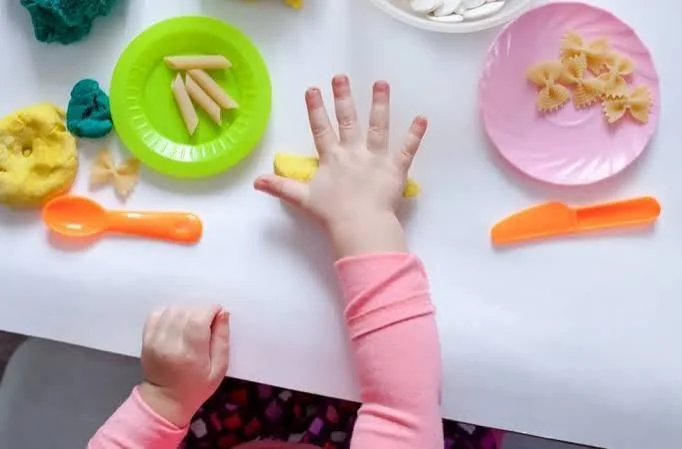
Sensory exploration: Encouraging children to explore food through looking, smelling, touching, playing and tasting, without pressure to eat.
Food chaining: Gradually introducing new foods that share familiar characteristics with foods the child already accepts.
Oral motor development: Supporting the skills needed for biting, chewing and managing different food textures.
Texture progression: Supporting gradual and appropriate progression towards a wider range of food consistencies.
Positive mealtime experiences: Developing confidence, reducing anxiety and supporting more enjoyable mealtimes.
Parent and carer coaching: Providing practical strategies and guidance to help families support feeding development at home.
We believe that feeding therapy should be about building confidence, developing skills and fostering positive relationships with food, rather than simply encouraging you or your child to simply ‘eat more’.
Sessions will be responsive and guided by each individual’s needs. This may be an education-based approach, or child-led, play-based sessions. We work collaboratively with families and support networks to make feeding experiences more positive and help individuals develop the skills and confidence to explore a wider variety of foods.